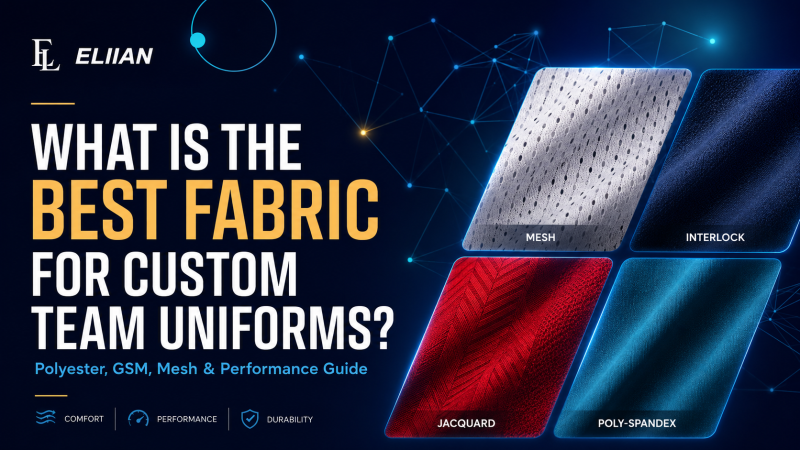
The best fabric for custom team uniforms is 100% polyester in a performance knit such as interlock, mesh, or pique, because it is lightweight, moisture-wicking, durable, and works perfectly with full-colour sublimation printing. The ideal weave and weight, however, depend on your sport, climate, and budget. Below is a complete 2026 guide to help you choose the right material before you request a quote.
Why Fabric Choice Matters for Team Uniforms
Fabric is the single biggest factor in how a uniform feels, performs, and lasts. The right material keeps players cool and dry during intense activity, holds its colour wash after wash, and resists stretching, pilling, and tearing. The wrong fabric traps heat, sags when wet, fades quickly, and cracks any printing on its surface. Because most teams wear their kits for one to three seasons, choosing the best fabric for custom team uniforms protects both player performance and your budget over time.
The Best Fabrics for Custom Team Uniforms
1. Polyester (Interlock, Mesh, Pique)
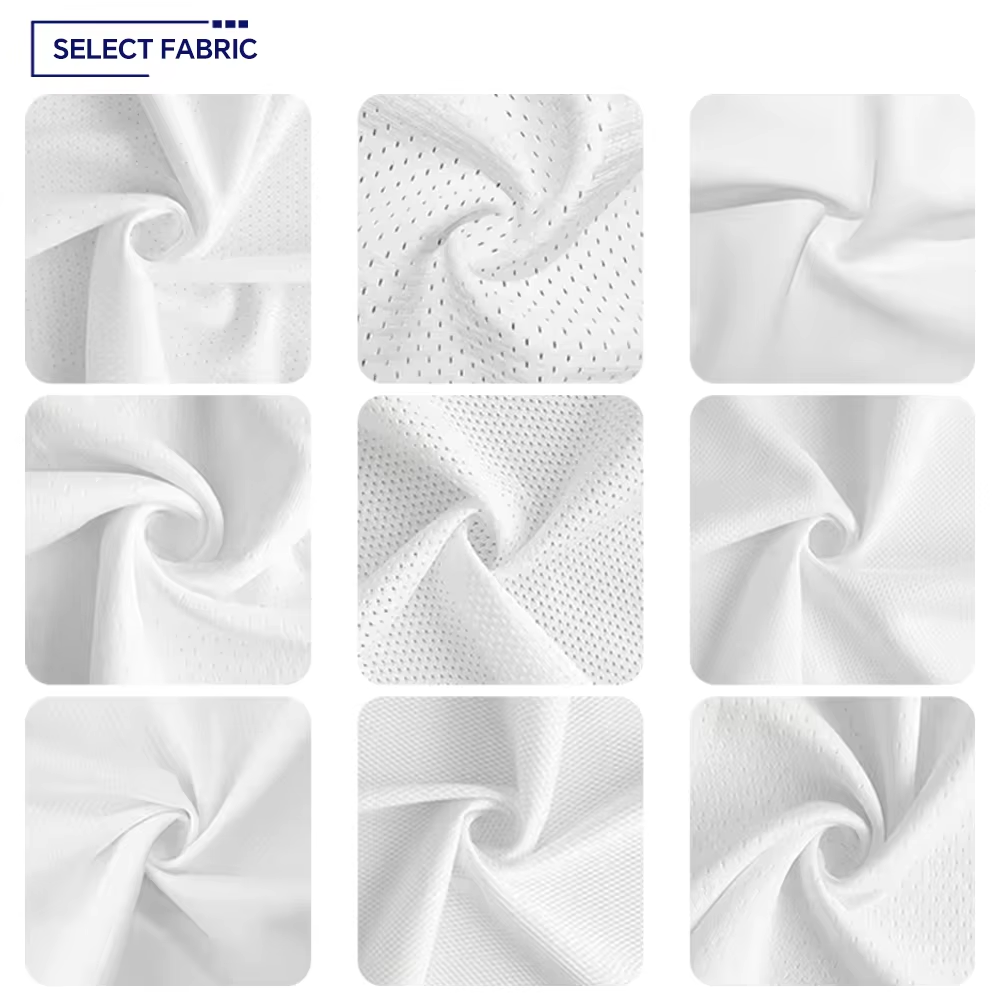
Polyester is the go-to fabric for modern sportswear and the most popular choice for custom team uniforms worldwide. It is lightweight, quick-drying, and holds sublimated colour better than any other material because the ink bonds directly with the polyester fibres. Interlock is a smooth, medium-weight knit ideal for jerseys; mesh is more breathable and used for high-heat sports; and pique has a textured surface popular for polo-style tops. For most clubs and schools, polyester offers the best balance of performance, print quality, and price.
2. Polyester-Spandex Blends
Adding a small percentage of spandex (elastane) gives fabric four-way stretch, which is essential for sports that demand a wide range of motion such as basketball, cycling, wrestling, and compression base layers. A typical blend is around 88% polyester and 12% spandex. These fabrics move with the athlete and provide a snug, supportive fit, though they cost slightly more than standard polyester.
3. Recycled Polyester (rPET)
Recycled polyester made from post-consumer plastic bottles performs almost identically to virgin polyester but carries a much smaller environmental footprint. It is increasingly requested by schools, universities, and eco-conscious brands. Expect a small price premium, but the sustainability story can be valuable for teams and sponsors who want to promote greener sourcing.
4. Cotton and Cotton Blends
Pure cotton is soft and breathable, making it a comfortable choice for casual team wear, fan merchandise, and off-field apparel like hoodies and t-shirts. However, cotton absorbs moisture and stays wet, so it is rarely used for on-field performance kits. Poly-cotton blends offer a middle ground: more comfort than pure polyester with better moisture management than pure cotton, suiting training tops and lifestyle pieces.
Fabric Comparison Table
| Fabric | Best For | Key Strengths | Trade-offs |
|---|---|---|---|
| Polyester interlock | Soccer, baseball, general jerseys | Durable, prints vividly, affordable | Less stretch than blends |
| Polyester mesh | Basketball, hot climates | Very breathable, lightweight | More see-through |
| Poly-spandex blend | Basketball, cycling, compression | Four-way stretch, snug fit | Higher cost |
| Recycled polyester | Eco-focused teams and brands | Sustainable, performs like virgin poly | Small price premium |
| Cotton / poly-cotton | Fan wear, training tops, hoodies | Soft, comfortable | Poor moisture-wicking |
Which Fabric Is Best for Each Sport?
Soccer: Lightweight polyester interlock or mesh keeps players cool over 90 minutes of continuous running. Basketball: Breathable mesh or a poly-spandex blend allows full range of motion and airflow in indoor heat. Baseball and softball: Mid-weight polyester holds up to sliding and repeated washing. Cycling and running: Poly-spandex blends with moisture-wicking finishes provide compression and a close, aerodynamic fit. Training and warm-ups: Heavier poly-cotton or brushed polyester adds warmth and comfort off the field.
Understanding Fabric Weight (GSM)
Fabric weight is measured in grams per square metre (GSM) and directly affects feel and durability. Lightweight performance jerseys typically fall between 130 and 160 GSM, offering breathability for high-intensity sports. Mid-weight fabrics around 160 to 200 GSM balance durability and comfort for everyday kits. Heavier fabrics above 200 GSM suit training jackets and cold-weather gear. When comparing quotes, always ask suppliers for the GSM so you know exactly what quality you are getting. For background on how synthetic fibres manage moisture, see the overview of polyester and its properties.
How Fabric Affects Printing and Design
Your fabric choice determines which decoration methods work best. Polyester is essential for dye sublimation, the process that produces vivid, all-over, fade-resistant designs because the ink becomes part of the fabric itself. Cotton and blends are better suited to screen printing or heat transfer. If you want colourful, full-coverage kits that never crack or peel, polyester plus sublimation is the winning combination. To compare decoration methods in detail, see our guide on sublimation vs screen printing vs heat transfer.
The Specification Lines to Put in Your Enquiry
“Breathable polyester” is not a specification, and two suppliers quoting against it can deliver very different garments at very different costs. If you write down five lines instead, quotes become comparable and samples stop surprising you.
- Fibre content. 100% polyester, or polyester with a stated elastane percentage. “Poly blend” is not an answer.
- Knit structure. Interlock, single jersey, bird-eye mesh, pique or warp knit. This affects drape, opacity and how the print reads more than weight does.
- Weight in gsm, with a tolerance. A quote of 150 gsm delivered at 135 gsm is a different garment. Plus or minus 5 gsm is a reasonable ask.
- Finish. Moisture-wicking treatment, anti-pilling, UV resistance or antibacterial, and whether it is a durable finish or a wash-off one.
- Performance evidence. Colour fastness and pilling grades, and shrinkage after one wash at the temperature your team will use.
Ask for the mill specification sheet rather than a description. Any factory that buys fabric rather than inventing it can produce one in a day.
Reading a Fabric Test Report
Two grades do most of the work. Colour fastness to washing and to rubbing is graded 1 to 5, and anything at grade 4 or above is fine for teamwear; grade 3 will visibly transfer onto white shorts. Pilling resistance is also graded 1 to 5 after a set number of cycles, and grade 4 is the practical minimum for a garment that will be washed twice a week. Shrinkage should be under about 3% in both directions after the first wash. If a report is undated, unsigned, or does not name the fabric it tested, it is decoration rather than evidence.
Recycled Polyester in Practice
Recycled polyester deserves a straighter answer than it usually gets. Mechanically recycled rPET performs close enough to virgin polyester for teamwear that most wearers cannot tell the difference, and it typically adds a modest premium per metre rather than transforming the price. Two caveats are worth knowing before you promise a sponsor a sustainability line. First, dye uptake on rPET can be slightly less consistent, which matters on large flat areas of a single strong colour and much less on a busy sublimated design. Second, “recycled” is only a claim unless it is traceable, so ask whether the mill holds a Global Recycled Standard certificate covering the specific fabric and ask for the transaction certificate on your order. Without that paper trail you cannot put the claim on a label in most markets.
Fabric Weight and Climate
Choosing gsm in the abstract is how clubs end up with a kit nobody wants to wear. Anchor the decision to where and when the kit is used.
- Hot and humid, summer season. 130-150 gsm mesh or bird-eye, with mesh panels under the arm and down the flanks. Accept that the lighter the fabric, the more the base colour shows through, and avoid white as a body colour if that matters.
- Temperate, standard season. 150-165 gsm interlock is the default for a reason. It prints cleanly, holds shape and is opaque enough for any colour.
- Cold or contact sport. 170-260 gsm depending on the sport. Rugby sits at the top of that range because the fabric has to survive being gripped, which is covered in the custom rugby jerseys guide.
- Training and outerwear layers. Different problem entirely, because you are now managing wind and water rather than heat. The custom outdoor jackets guide covers shell fabrics, coatings and membranes.
One practical warning about very light fabrics: below roughly 130 gsm a jersey becomes translucent when wet, and a team that discovers this in the first match will not forgive the person who ordered it.
Fabric and Fit Are the Same Decision
Stretch changes what a size means. A 100% polyester interlock has mechanical stretch only, so the measurement on the size chart is very close to the measurement on the body. Add 8-12% elastane and the same nominal size will fit a noticeably larger chest, which is why comparing size charts between suppliers without knowing the fibre content is meaningless. If you are moving from a stretch fabric to a rigid one, expect to size up across part of the squad, and always confirm against the published measurements on the size chart rather than the letter size.
Care, Washing and What Actually Destroys Kit
Polyester teamwear does not usually wear out; it gets destroyed. The three culprits are heat, fabric softener and the tumble dryer. High wash temperatures accelerate fading on sublimated colour and can soften heat-transfer adhesive enough to lift a number edge. Fabric softener coats the fibre and directly defeats the moisture-wicking finish you paid for, and it is the most common reason a club reports that “the new kit does not breathe like the old one”. A tumble dryer does both at once.
The instruction to give a kit manager is short: cold or 30 degree wash, inside out, no softener, no dryer, no ironing over print. Print it on a card and put it in the kit bag. On a fifty-piece order that card is worth more than any fabric upgrade.
Where Fabric Sits in the Total Cost
Fabric is usually the largest single input in a sublimated jersey, but it is rarely the reason two quotes differ. Moving from 150 gsm to 165 gsm interlock changes the unit price by cents, not dollars. Moving from 100% polyester to a cotton-rich pique, or adding elastane, moves it more. What moves a quote most is quantity, decoration count and freight, which is why a fabric downgrade is almost never the right place to find savings — the full breakdown is in the team uniform cost and MOQ guide.
It is also worth knowing that fibre content can change your duty rate. Customs classification of knitted upper-body garments turns on construction and material, and a cotton-rich polo can land in a different, higher tariff line than a polyester jersey in several markets. If you are ordering mixed categories, check the shipping and import duty hub before you finalise the fabric, not after.
Tips for Choosing the Right Uniform Fabric
Choosing the best fabric for custom team uniforms starts with matching the material to your sport and climate rather than defaulting to the cheapest option. Always request physical fabric samples before committing to a bulk order so you can judge feel, stretch, and opacity in person. Confirm the GSM and fibre composition in writing, and ask whether moisture-wicking or anti-odour finishes are included. Finally, wash a sample to check colour retention and shrinkage. A reputable factory will happily provide swatches and full specifications up front.
Frequently Asked Questions
What is the best material for sports jerseys?
100% polyester in an interlock or mesh knit is the best all-round material for sports jerseys. It is lightweight, moisture-wicking, durable, and produces the brightest, longest-lasting results with sublimation printing.
Is polyester or cotton better for team uniforms?
Polyester is better for on-field performance uniforms because it wicks sweat and dries quickly, while cotton absorbs moisture and stays heavy when wet. Cotton and poly-cotton blends are better reserved for casual wear, training tops, and fan merchandise.
What GSM is best for team jerseys?
Most performance jerseys use fabric between 130 and 160 GSM for breathability, while 160 to 200 GSM offers a more durable, structured feel for everyday kits. Training jackets and cold-weather gear typically use heavier fabrics above 200 GSM.
Which fabric is most durable for uniforms?
High-quality polyester and poly-spandex blends are the most durable for active use, resisting stretching, pilling, and fading through repeated washing far better than cotton.
Get the Right Fabric for Your Team
Eliian is a factory-direct sportswear manufacturer in Xiamen, China, producing fully custom team uniforms for clubs, schools, and brands worldwide. We help you choose the best fabric for custom team uniforms, matching the ideal weight and finish to your sport and budget, then bring your design to life with vivid sublimation printing. Send your logo, approximate quantity, and target delivery date and you will receive a free fabric recommendation, design mockup, and price estimate within one business day. Message us on WhatsApp or request a free quote to get started with no obligation.
Related guides: printing and fabric guide.