Short answer: the best fabric for custom baseball jerseys is a 290 g/m² polyester birdseye knit. It is heavy and firm enough to stay opaque on white home jerseys, to hold buttons and sewn tackle twill lettering, and to survive sliding and diving, while its birdseye texture still breathes and wicks sweat through a long game. It is the fabric we recommend and make our baseball jerseys in. This guide explains why, when a different fabric makes sense, and what to put in your enquiry.
Why baseball needs a different fabric from soccer or basketball
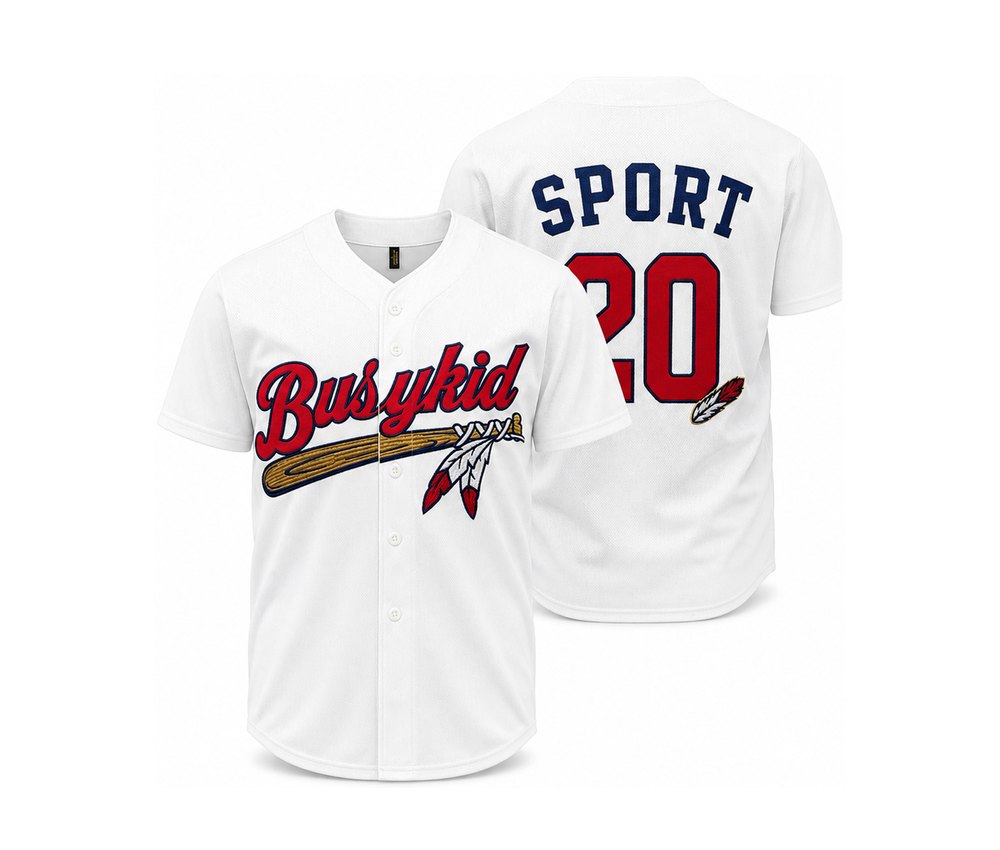
A soccer or basketball jersey is a light, single-purpose garment built for constant running. A baseball jersey has a different job. It is usually a button-down with a front placket, it often carries sewn tackle twill lettering and numbers, it is worn for three hours or more in the sun, and it takes real abuse when a player slides into a base or dives for a ball.
That means the fabric needs body (to hang properly and support buttons and twill), opacity (white and grey home jerseys must not show through), abrasion resistance (sliding), and still enough breathability for long summer games. A lightweight soccer mesh fails on the first three. A heavy birdseye knit delivers all four.
The best fabrics for baseball jerseys
1. 290 g/m² polyester birdseye — our recommendation
Birdseye is a polyester knit with a small, regular pattern of tiny holes that look like a bird’s eye. At 290 g/m² it is a substantial, premium fabric: it hangs like a traditional baseball jersey, holds a crisp placket and buttons, carries tackle twill without puckering, and stays opaque on white. The birdseye structure keeps air moving and lets sweat evaporate, and it is quick-dry and anti-bacterial. It also takes full sublimation printing, so pinstripes, gradients and all-over designs are dyed into the fibre and will not crack or peel.
2. Lighter polyester knits — for heat and practice
For very hot climates, youth summer leagues or practice tops, a lighter polyester knit plays cooler and costs a little less. The trade-offs are lower opacity on white and less durability on the field. If you choose a lighter fabric, avoid white or pale colours as the main body colour.
3. Mesh back or side panels
A mesh panel across the back or under the arms adds airflow without making the whole jersey light. It is a good option for teams that play in heat but still want a heavy, traditional front for buttons and lettering.
4. Cotton-feel polyester — for retro and throwback jerseys
If the look of an old flannel or cotton jersey matters, a cotton-feel polyester gives a softer, matte hand while keeping polyester’s wicking and colourfastness. Real cotton is not recommended for game kit: it holds sweat, shrinks and cannot be sublimated.
5. Polyester with stretch — for softball and fitted cuts
Women’s softball jerseys in a fitted cut benefit from a small stretch content so the jersey moves with the body. We make softball jerseys in a women’s fit.
Baseball fabric comparison
| Fabric | Weight | Opacity on white | Durability | Breathability | Best for |
|---|---|---|---|---|---|
| Polyester birdseye (recommended) | 290 g/m² | Excellent | Excellent | Good | Game jerseys, button-downs, twill lettering, white home kits |
| Lighter polyester knit | Lighter | Fair | Fair | Very good | Hot-climate and practice tops, darker colours |
| Birdseye body + mesh panels | Mixed | Excellent on front | Very good | Very good | Teams playing in heat who want a traditional front |
| Cotton-feel polyester | Varies | Good | Good | Good | Retro and throwback jerseys |
| Cotton | Varies | Good | Poor when wet | Poor | Fan wear only |
Why 290 g/m²?
GSM means grams per square metre. 290 g/m² is heavier than a typical soccer or basketball jersey, and that is deliberate. The extra weight gives a baseball jersey its traditional drape, keeps a white or grey jersey from turning see-through when wet, supports the buttons and placket, and stands up to repeated slides and laundering through a full season. The birdseye knit keeps that weight breathable.
- White and grey home jerseys: stay with 290 g/m² so they stay opaque.
- Tackle twill numbers and wordmarks: a heavier base fabric stops the twill from puckering.
- Hot climates: keep birdseye on the front and add mesh panels, rather than dropping the whole jersey to a light fabric.
Matching baseball pants
Pants take the most punishment in baseball. They are normally made in a stretch polyester double-knit with reinforced knees, so they move freely and survive sliding. Match the pant colour to the jersey trim, and order belt loops and piping in the same colourway. Baseball pants cost USD 5–10 per pair at Eliian.
How fabric affects decoration
A 290 g/m² birdseye works with every decoration method we offer. Sublimation is the lowest-cost way to get unlimited colours, pinstripes and names and numbers. Tackle twill gives the raised, classic look of the sport and needs the firm base that birdseye provides. Embroidery suits sleeve patches and small chest logos. Our custom baseball jerseys guide explains when to use each.
The fabric lines to put in your enquiry
- Fabric: 290 g/m² polyester birdseye (or your alternative).
- Style: full-button, two-button or pullover.
- Decoration: sublimation, tackle twill or embroidery, and where.
- Main colours, especially if the home jersey is white or grey.
- Any mesh panels, and the climate you play in.
- Pants: colour, piping and belt loops.
Care
Wash inside out in cold water, fasten the buttons first, skip fabric softener and line-dry. Avoid high dryer heat on jerseys with tackle twill, because heat can lift the edges of the twill.
Where fabric sits in the cost
At Eliian a custom baseball jersey costs USD 9.5–13 per piece, baseball pants USD 5–10, so a full uniform is about USD 14.5–23 per player, with a minimum of 10 pieces per design and sizes from adult XS to 7XL plus youth. Button-down construction, twill lettering and embroidery move the price within that band. See how much custom baseball uniforms cost for team totals.
Tips for choosing baseball jersey fabric
- Default to 290 g/m² birdseye for game jerseys.
- Do not drop the weight on white or grey home jerseys.
- Use mesh panels for heat instead of a lighter body fabric.
- Choose a heavy base if you want tackle twill lettering.
- Approve the fabric on the physical sample before bulk.
Birdseye vs other baseball knits, side by side
Several knits are sold as “baseball fabric”. They differ in surface, weight and how well they take buttons and lettering:
| Knit | Surface | Typical weight | Strengths | Limits |
|---|---|---|---|---|
| Polyester birdseye | Fine diamond-shaped holes, textured | 290 g/m² (our recommendation) | Opaque, durable, breathable, holds twill and buttons | Heavier and warmer than a light mesh |
| Smooth polyester knit / interlock | Smooth, no visible holes | Lighter to medium | Very sharp sublimation detail | Less airflow; less traditional texture |
| Light athletic mesh | Open round holes | Light | Coolest to wear | See-through on white, wears faster, poor base for twill |
| Cotton-feel polyester | Matte, soft hand | Varies | Retro look with polyester performance | Usually less breathable than birdseye |
Pinstripes, piping and sublimation on birdseye
Pinstripes are part of baseball’s identity, and they are where fabric choice shows. On a sublimated birdseye jersey the stripes are dyed into the fabric, so they stay straight across seams, never peel and can be any colour or width. Sublimation also handles gradients, sleeve graphics and player names in one process with no setup fee. Piping along the placket and sleeves is sewn on and should match a Pantone reference in your artwork; we match colours to the Pantone codes you supply.
Youth, softball and coaches’ jerseys
- Youth baseball: sizes YS–YXL. The same birdseye works well; for very hot summer leagues, keep birdseye on the front and add mesh panels rather than switching the whole jersey to a light fabric. Youth sizes are about 10–15% cheaper than adult sizes.
- Softball: we make softball jerseys in a women’s fit; a small stretch content helps a fitted cut move.
- Coaches: coaches often prefer a lighter pullover or a performance polo in the team colours; see our guide to the best fabric for polo shirts.
- Adult sizes: XS to 7XL, mixed freely within the 10-piece minimum per design.
How to check the fabric on your sample
- Opacity: hold a white or grey jersey up to the light. At 290 g/m² you should not see through it.
- Placket and buttons: button and unbutton the jersey several times; the placket should lie flat without puckering.
- Twill test: if you ordered tackle twill, check that the fabric under the letters is flat and the edges are sewn cleanly.
- Abrasion feel: rub the fabric firmly against itself; a good birdseye should not fuzz or pill immediately.
- Fit: try it on a player in a batting and throwing motion; the shoulders and sleeves must not restrict the swing.
Common fabric mistakes on baseball orders
- Using a light soccer mesh for white home jerseys. It shows through and wears quickly on the field.
- Adding tackle twill to a thin fabric. The lettering puckers and pulls the jersey out of shape.
- Choosing real cotton for a retro look. A cotton-feel polyester gives the look without the sweat, shrinkage and fading.
- Ordering jerseys and pants from different suppliers. Colours and piping rarely match exactly.
- Ordering too late. Allow for the mockup, sample and bulk production before opening day; plan about 8–10 weeks ahead.
Fabric and US import duty for baseball jerseys
Fabric and construction affect how a baseball jersey is classified at US customs, and the difference is large. A sublimated knit jersey in man-made fibre is classified at HTS 6114.30.30 with a 14.9% duty rate. If the same garment is classified as a T-shirt (6109.90.10) or as a jersey or pullover (6110.30.30), the rate is 32%. China-origin goods also carry Section 301 duties of +7.5% plus other additional duties. We state the HS code on every invoice, but we are a manufacturer, not a customs broker, so confirm the classification of your specific jersey with your broker. Our custom baseball jerseys guide explains why button-down jerseys raise this question.
Recycled polyester and fabric test reports
Recycled polyester is available on request. We do not currently hold a GRS certificate. Fabric test reports for the fabrics we use are available on request, which is useful when a school district or league asks for documentation.
Season planning: when to order
| Weeks before opening day | Step |
|---|---|
| 10 weeks | Send roster, logo and colours; receive a free digital mockup within 24 hours |
| 9 weeks | Approve mockup; physical sample made in 5–7 days |
| 7–8 weeks | Approve sample and fabric; bulk production starts |
| 4–5 weeks | Bulk finished in about 15–20 days after sample approval; ship by air or express |
| 1–2 weeks | Delivered, with time to fix any sizing issue |
Best fabric by sport: team jerseys (soccer, volleyball, football) · basketball uniforms · polo shirts · rugby jerseys · team jackets · leggings and yoga wear
Frequently asked questions
What is the best fabric for baseball jerseys?
A 290 g/m² polyester birdseye knit. It is heavy enough to stay opaque on white home jerseys and to carry buttons and tackle twill lettering, durable enough for sliding and diving, and its open birdseye texture still breathes and wicks sweat. It is the fabric we recommend for custom baseball jerseys.
What is birdseye fabric?
Birdseye is a polyester knit with a small, regular pattern of tiny holes that look like a bird’s eye. The holes let air through and help sweat evaporate, while the knit stays firm and durable.
What GSM should a baseball jersey be?
We recommend 290 g/m² birdseye for game jerseys. Lighter fabrics feel cooler but can show through on white and wear faster on the field; a lighter knit can still be specified for very hot climates or practice tops.
Is polyester or cotton better for baseball jerseys?
Polyester. It wicks sweat, dries fast, keeps its shape and takes sublimation printing. Cotton absorbs sweat, gets heavy and cannot be sublimated; if you want a retro look, ask for a cotton-feel polyester instead.
How much do custom baseball jerseys cost?
At Eliian a custom baseball jersey costs USD 9.5–13 per piece and baseball pants USD 5–10, so a full uniform is about USD 14.5–23 per player, with a minimum of 10 pieces per design.
Get the right fabric for your team
Tell us your style, colours and quantity and we will send a free digital mockup within 24 hours and a physical sample in 5–7 days. See our custom baseball jerseys page, the baseball jersey size chart, and our general guide to the best fabric for custom team uniforms, or request a quote.
More questions buyers ask
Is 290 GSM too heavy for summer baseball?
For most leagues, no: the birdseye structure keeps a 290 g/m² jersey breathable. In very hot climates keep birdseye on the front for buttons and lettering and add mesh back or underarm panels.
Can birdseye baseball jerseys be sublimated?
Yes. Polyester birdseye takes full sublimation, so pinstripes, gradients, names and numbers are dyed into the fabric and will not crack or peel.
What fabric are baseball pants made of?
Usually a stretch polyester double-knit with reinforced knees, so they move freely and survive sliding. Our baseball pants cost USD 5–10 per pair.
Do you make baseball jerseys in recycled polyester?
Recycled polyester is available on request. We do not currently hold a GRS certificate.