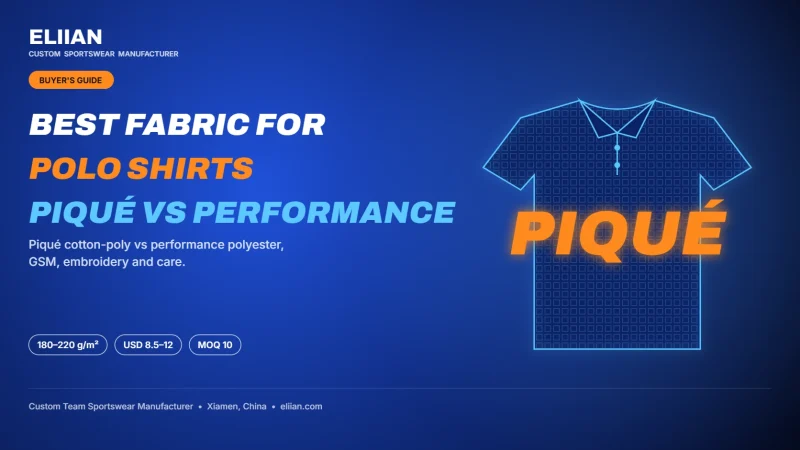
Short answer: the best fabric for a custom polo shirt is a piqué knit at 180–220 g/m². Choose a piqué cotton-poly blend for corporate, hospitality and event polos, where a soft cotton hand and a matte look matter most, and 100% performance polyester for golf, tennis, sports clubs and outdoor staff, where quick-dry and colourfastness matter most. A poly-cotton blend sits between the two for everyday uniforms. This guide explains each option, the weight to ask for, and how fabric affects embroidery and printing.
Why polo fabric is a different decision from jersey fabric
A team jersey is chosen for one thing: performance during a game. A polo is worn in many situations: at a front desk, on a golf course, at a trade show, on a warehouse floor, five days a week. The same shirt has to look smart, feel comfortable all day, survive frequent washing and carry a logo that still looks good in three years. That is why polos are made in a wider range of fabrics than jerseys, and why the right choice depends on the use case more than on the sport.
The best fabrics for polo shirts
1. Piqué cotton-poly blend — best for corporate and hospitality
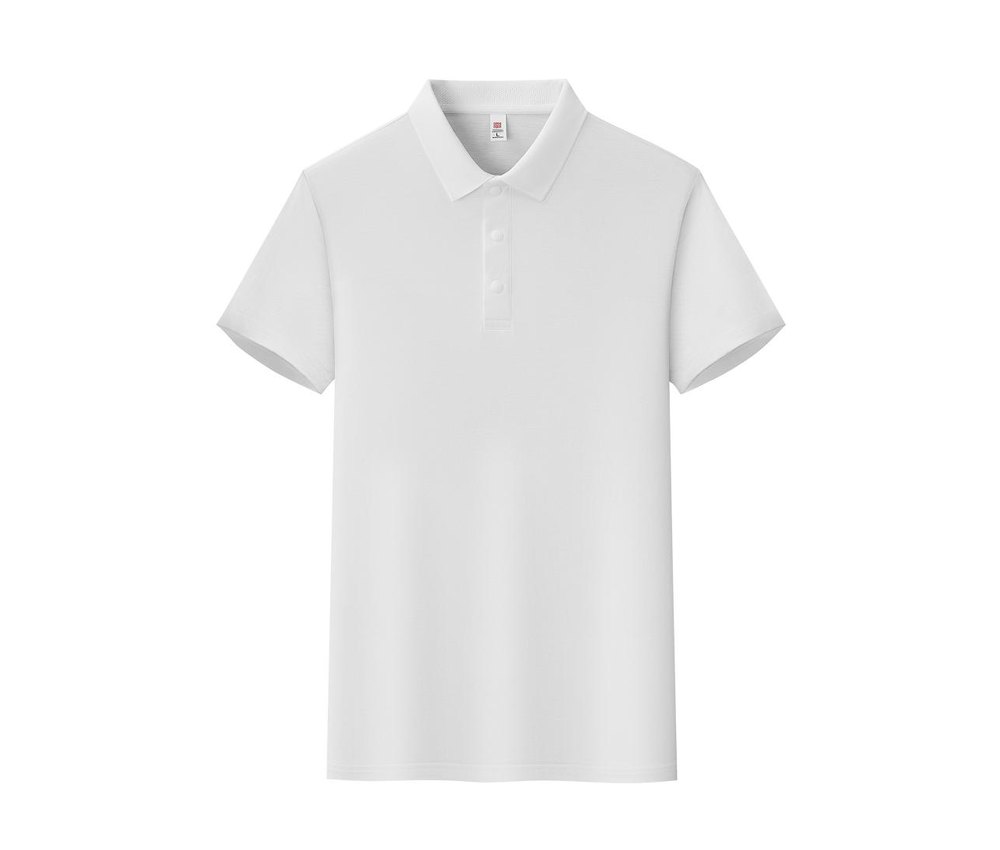
Piqué is a textured, waffle-like knit. It breathes well, hides creases, holds the collar shape and gives the classic polo look. In a cotton-poly blend it has a soft, cotton-like hand and less shine, which reads as smart and professional. It is the usual choice for corporate teams, hospitality, reception and retail staff, and event shirts.
2. 100% performance polyester — best for sports and outdoor work
A smooth or fine-piqué performance polyester is quick-dry, holds its colour and keeps its shape after many washes. It suits golf and tennis clubs, sports clubs, coaches and outdoor staff — anyone who moves or sweats in the shirt. Smooth performance polyester can also be printed with full-colour graphics.
3. Poly-cotton blend — best for everyday uniforms
A poly-cotton blend balances comfort and durability for staff who wear the shirt all day, every day. It is easier to care for than a high-cotton shirt and softer than pure polyester.
A note on wool blends
Polo shirts with 23% or more wool fall under a different US tariff line with a much lower duty rate than standard knit polos. We do not list a wool-blend piqué in our standard range, but we can quote one; our custom polo shirts guide explains the tariff difference.
Polo fabric comparison
| Fabric | Feel and look | Breathability | Care | Best for |
|---|---|---|---|---|
| Piqué cotton-poly blend | Textured piqué face, soft cotton hand, matte | Very good | Easy; holds shape well | Corporate, hospitality, events |
| 100% performance polyester | Smooth or fine piqué, holds colour | Very good, quick-dry | Easiest; fast drying | Golf, tennis, sports clubs, outdoor staff |
| Poly-cotton blend | Between the two | Good | Easy | Everyday staff uniforms |
| High-cotton piqué | Softest, most natural | Good | Can shrink and fade | Low-wear, premium retail polos |
What weight (GSM) should a polo shirt be?
Our polo range sits at 180–220 g/m², the normal window for a business or club polo.
| Weight | How it feels | Typical use |
|---|---|---|
| Under 180 g/m² | Light, but can feel flimsy and show through | Not recommended for uniforms |
| 180–200 g/m² | Light and breathable | Sports and summer polos, hot climates |
| 200–220 g/m² | Substantial, holds shape | Daily uniforms, commercially laundered shirts, corporate wear |
| Above 220 g/m² | Stiff collar, warm indoors | Rarely needed |
The heavier end is the better choice for shirts that are commercially laundered or worn as a daily uniform, because the fabric holds its shape through repeated hot washes. Tell us the use case and we will recommend a weight.
How fabric affects embroidery and printing
Embroidery is the classic choice for polos and reads as a proper uniform. Our in-house chest logos are rated at 500+ washes. A standard left-chest logo is 7–9 cm wide; a sleeve logo is about 5 cm. Heat transfer handles fine detail, gradients and multi-colour artwork. Full sublimation is not the right process for a piqué cotton-poly polo, because it only dyes polyester and the textured surface prints unevenly; it is used only on smooth performance-polyester polos.
The practical rule: if the logo is simple and the shirt will be washed weekly for years, embroider it. See our company polo embroidery guide for logo size and placement.
The fabric lines to put in your enquiry
- Fabric: piqué cotton-poly, 100% performance polyester or poly-cotton.
- Weight: within 180–220 g/m².
- Use case: office, hospitality, golf, outdoor staff, event.
- Decoration: embroidery or heat transfer, positions and logo sizes.
- Trims: collar and cuff colours, button colour or branded buttons.
- Sizes and cuts: men’s S–5XL, women’s XS–3XL.
Care
Wash at 30–40°C inside out, fasten the buttons, avoid bleach, and dry on low heat. Iron on the reverse and never directly over embroidery or a heat-transfer logo.
Where fabric sits in the cost
At Eliian custom polo shirts cost USD 8.5–12 per piece: USD 10–12 at 10–50 pieces and USD 8.5–10 at 100 pieces or more, with a minimum of 10 pieces per design. Fabric weight and fibre, the number of embroidered positions, contrast trims and private labelling move the price within that band. Embroidery digitizing is USD 10–30 per logo, waived on orders over 100 pieces and on reorders.
Tips for choosing polo fabric
- Start from how the shirt will be worn, not from the price.
- Office and hospitality: piqué cotton-poly. Sport and outdoor: performance polyester.
- Stay within 180–220 g/m², heavier for daily uniforms.
- Embroider simple logos; use heat transfer for detailed artwork.
- Approve the fabric and logo on the physical sample before bulk.
Single piqué, double piqué and jersey knit
“Piqué” is a family of knits, not one fabric. The structure changes how the polo looks and how well it carries a logo:
| Knit | Surface | Look and feel | Best for |
|---|---|---|---|
| Single piqué | Fine honeycomb texture | Lighter, more breathable, classic sporty look | Sports clubs, summer staff polos |
| Double piqué | Deeper, firmer texture | Heavier, holds shape, smart and structured | Corporate and hospitality uniforms, embroidered logos |
| Jersey (smooth) knit | Flat, smooth | Soft, T-shirt-like drape | Performance and golf polos, printed graphics |
| Fine performance piqué | Very fine texture in polyester | Quick-dry, light sheen | Golf, tennis, coaching staff |
Which polo fabric for which industry?
The same polo can be right for one workplace and wrong for another. Use this table as a starting point, then confirm on the sample:
| Industry or use | Recommended fabric | Weight | Decoration |
|---|---|---|---|
| Corporate office and reception | Double piqué cotton-poly | 200–220 g/m² | Embroidered left-chest logo |
| Hotels, restaurants and hospitality | Cotton-poly or poly-cotton piqué, dark colours | 200–220 g/m² | Embroidered logo, optional sleeve logo |
| Retail and showroom staff | Poly-cotton blend | 190–210 g/m² | Embroidery or heat transfer |
| Golf and tennis clubs | Fine performance polyester | 180–200 g/m² | Embroidery; heat transfer for sponsors |
| Sports clubs and coaching staff | Performance polyester piqué | 180–200 g/m² | Embroidered crest, printed sponsors |
| Construction, logistics and outdoor work | Performance polyester, colourfast | 200–220 g/m² | Embroidery for durability |
| Trade shows and one-off events | Piqué cotton-poly | 180–200 g/m² | Heat transfer or embroidery |
| Schools | Poly-cotton piqué | 200–220 g/m² | Embroidered school crest |
For a single uniform programme, it is usually better to choose one fabric and one weight for everyone and vary only the colour, so reorders stay consistent and the cost per piece stays in the lower part of the USD 8.5–12 band.
Why fabric weight matters for embroidery
Embroidery puts thousands of stitches into a small area of fabric. On a thin or very stretchy fabric, that can pull the cloth and leave a puckered ring around the logo. A piqué in the upper half of the 180–220 g/m² range supports a chest logo much better, which is why we recommend the heavier end for embroidered uniform polos. Our in-house chest logos are rated at 500+ washes. Keep very small text and hairline strokes out of embroidered logos; use heat transfer for that kind of detail.
Colour, fabric and consistency
- Dark colours (navy, black, bottle green) hide wear and suit hospitality and outdoor staff; choose a colourfast performance polyester if the shirts are washed hot.
- Light colours (white, sky, pastels) need enough weight to stay opaque; stay at 200 g/m² or above for white uniforms.
- Brand colours: thread and print colours are matched to the Pantone references you supply.
- Collars and cuffs: contrast collar and cuff colours are a trim choice and can be specified on any of our polo fabrics.
Fabric for uniform programmes and reorders
Many polos are ordered as an ongoing uniform programme, with new staff joining every few months. Choose a stock fabric and colour you can reorder easily, and keep the specification on file: fabric, weight, colour references, logo size and position. Reorders are charged at the same price with no new setup, and embroidery digitizing is not charged again on reorders. Private-label neck labels, hang tags and polybags have no minimum and usually add less than USD 1 per piece.
How to check the fabric on your sample
- Collar: the collar should lie flat and keep its shape after washing, without curling at the points.
- Opacity: hold a white or light polo up to the light.
- Logo: check the embroidery from both sides; there should be no puckering around the logo.
- Hand feel: confirm the cotton-poly feels soft enough for all-day wear, or the performance polyester feels cool and dry.
- Wash test: wash the sample once at your normal temperature and check shrinkage, colour and the logo.
Common fabric mistakes on polo orders
- Choosing by price only. The lightest, cheapest fabric looks tired after a few months of daily wear.
- Using a thin fabric for a large embroidered logo. It puckers.
- Sublimating a piqué cotton-poly polo. It will not print evenly; embroider or heat-transfer instead.
- Picking 100% cotton for staff who sweat. Performance polyester or poly-cotton stays fresher.
- Not recording the specification. Reorders then drift in colour and fit.
Polo fabric and import duty
Fibre content affects duty. In the United States a standard knitted polo is classified at HTS 6105.20.20 with a 32% duty rate, plus Section 301 duties of +7.5% on China-origin goods. Polo shirts containing 23% or more wool fall under a different line with a 13.6% rate. In the UK a knitted polo pays 12% duty plus 20% import VAT, and in Australia a valid declaration of origin under ChAFTA brings the duty to 0%, with 10% GST. Confirm the classification of your order with your customs broker; our shipping and import duty reference has the full table.
Best fabric by sport: team jerseys (soccer, volleyball, football) · basketball uniforms · baseball jerseys · rugby jerseys · team jackets · leggings and yoga wear
Frequently asked questions
What is the best fabric for polo shirts?
It depends on how the polo is worn. A piqué cotton-poly blend is best for corporate, hospitality and event polos; 100% performance polyester is best for golf, tennis, sports clubs and outdoor staff; a poly-cotton blend suits everyday uniforms worn all day. All three work best at 180–220 g/m².
What GSM is best for a polo shirt?
180–220 g/m². Below that a polo feels flimsy and can show through; above it the collar gets stiff and the shirt runs warm indoors. Choose the heavier end for shirts that are commercially laundered or worn as a daily uniform.
Is piqué or jersey better for polo shirts?
Piqué. Its textured, waffle-like knit breathes better, hides creases, holds the collar shape and gives the classic polo look. Smooth jersey knits are used mainly for performance and sports polos.
Can you sublimate a piqué polo?
Full sublimation is not the right process for a piqué cotton-poly polo, because sublimation only dyes polyester and the textured surface prints unevenly. Use embroidery or heat transfer on piqué; smooth performance-polyester polos can be printed.
How much do custom polo shirts cost?
At Eliian custom polo shirts cost USD 8.5–12 per piece: USD 10–12 at 10–50 pieces and USD 8.5–10 at 100 pieces or more, with a minimum of 10 pieces per design. Embroidery digitizing is USD 10–30 per logo, waived on orders over 100 pieces and on reorders.
Get the right polo for your team
Tell us the use case, colours and quantity and we will recommend the fabric and weight, send a free digital mockup within 24 hours and a physical sample in 5–7 days. See our custom polo shirts page, the polo shirt size chart, and our general guide to the best fabric for custom team uniforms, or request a quote.
More questions buyers ask
What is the most durable fabric for work polo shirts?
A double piqué or performance polyester at the heavier end of 180–220 g/m². Both hold their shape through frequent commercial washing better than lightweight or high-cotton polos.
Is cotton or polyester better for polo shirts?
A cotton-poly piqué is best for comfort and a smart look indoors; 100% performance polyester is best for sport, heat and outdoor work because it dries fast and holds colour. Pure cotton is the least durable for uniforms.
What fabric is best for golf polo shirts?
A light, smooth or fine-piqué performance polyester: quick-dry, breathable and colourfast in the sun.
How many washes does an embroidered polo logo last?
Our in-house embroidered chest logos are rated at 500+ washes.