
Short answer: the best fabric for custom soccer jerseys and football kits is 100% polyester knit. For match jerseys, choose quick-dry polyester mesh at 130–160 g/m²; for a smoother, premium look with the sharpest print, choose polyester interlock at 160–180 g/m². Both take full sublimation, so the crest, sponsors, names and numbers are dyed into the fabric and never crack or peel. This 2026 guide explains each fabric, the weight to ask for, and what to put in your enquiry.
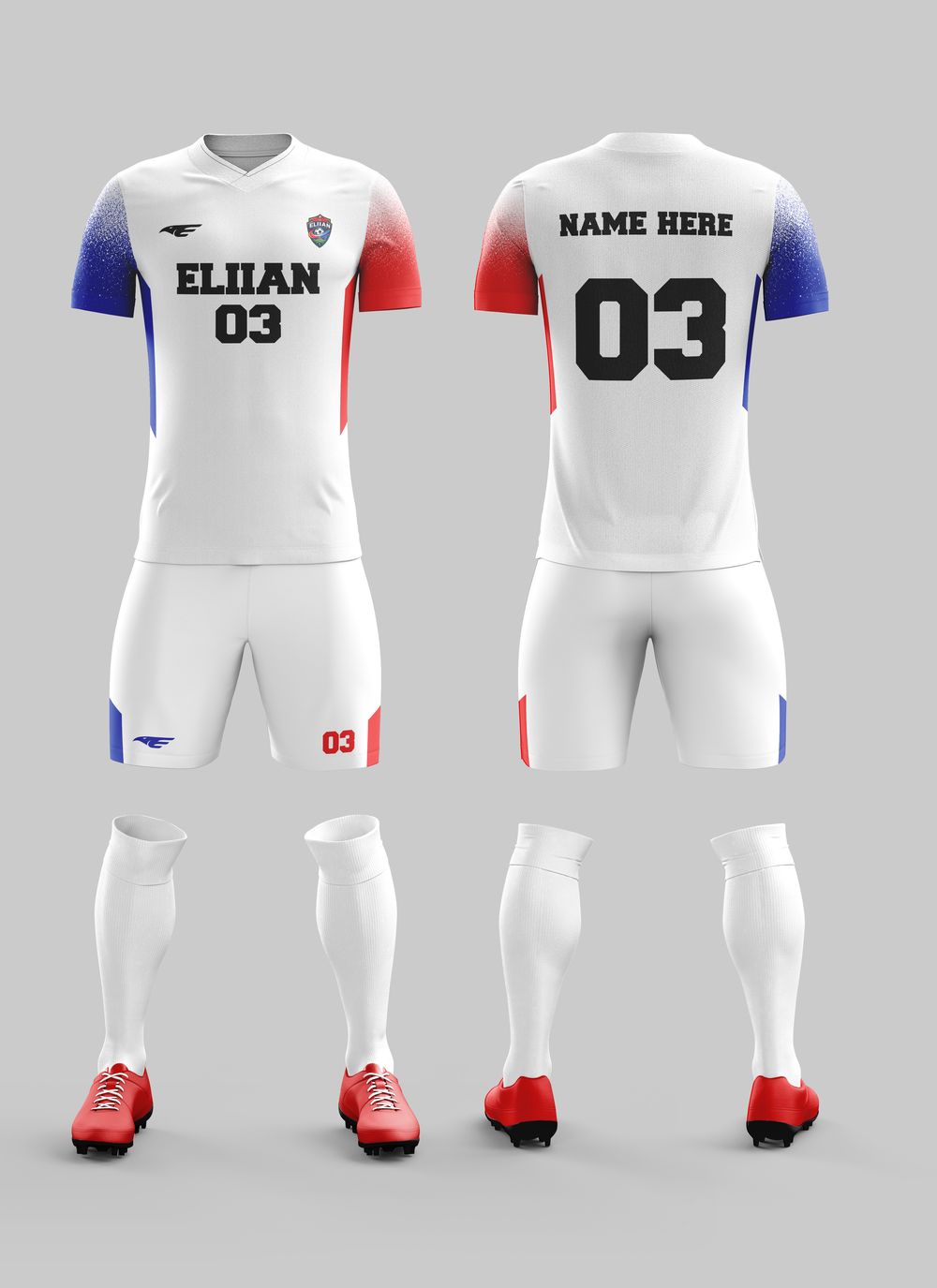
Why soccer jerseys are made of polyester
A soccer jersey is worn for 90 minutes of continuous running, often in the sun or rain. It has to move sweat away from the skin, dry quickly, keep its shape when pulled in a challenge, and survive a wash after every match. Polyester knit does all four, and it is light and inexpensive.
The second reason is printing. Almost every team kit today is fully sublimated: the design is printed on transfer paper and turned into a gas by heat, which dyes the polyester fibre itself. Sublimation only works on polyester, so the real decision is not whether to use polyester but which knit and what weight.
The main soccer jersey fabrics
1. Quick-dry polyester mesh: the standard match fabric
Mesh is a knit with small, regular holes that let air through. At 130–160 g/m² it is light, breathable and dries fast, which is why it is the default for match jerseys, warm climates and high-intensity play. It is what most clubs order from us.
2. Polyester interlock: the premium, smooth choice
Interlock is a double-knit with a smooth face on both sides. At 160–180 g/m² it has a more structured, professional look, hangs well on the body and prints the finest detail, gradients and small sponsor text most sharply. It breathes less than open mesh, so it suits premium kits, cooler climates and long-sleeve jerseys.
3. Birdseye mesh: ventilation panels
Birdseye is a mesh with a small diamond-shaped texture. It is often used for side, underarm or back panels to add ventilation where players sweat most, while the front stays smooth enough for a crisp crest and sponsor.
4. Recycled polyester
Recycled polyester is made from post-consumer plastic such as bottles. It performs and prints like virgin polyester and is available for clubs and brands with sustainability requirements. If you need certified recycled content, ask at the enquiry stage which documents the factory can supply for the fabric.
Fabrics to avoid for match kits
Cotton and cotton-rich blends absorb sweat, get heavy and slow to dry, and cannot be sublimated. Keep cotton for fan tees and travel wear.
Soccer jersey fabric comparison
| Fabric | Weight | Breathability | Look and feel | Print detail | Best for |
|---|---|---|---|---|---|
| Quick-dry polyester mesh | 130–160 g/m² | High | Light, sporty, textured | Good | Match jerseys, warm climates, youth and adult clubs |
| Polyester interlock | 160–180 g/m² | Medium | Smooth, structured, pro look | Sharpest | Premium kits, cooler climates, long sleeves, detailed designs |
| Birdseye mesh panels | Used as panels | Highest | Textured | Good | Side, underarm and back ventilation |
| Recycled polyester | Same as above | Same as above | Same as above | Same as above | Clubs and brands with sustainability targets |
| Cotton / cotton blend | — | Low | Soft, heavy when wet | Not sublimatable | Fan tees only |
What weight (GSM) should a soccer jersey be?
GSM means grams per square metre. Our soccer fabrics run from 130 to 180 g/m², with 140–160 g/m² the normal window for a single-layer match jersey.
| Weight | How it feels | Typical use |
|---|---|---|
| 130–140 g/m² | Very light and cool; white and pastel colours can show through | Hot climates, summer tournaments, youth training |
| 140–160 g/m² (standard) | Balanced: breathable, opaque enough, durable | Most club, school and league match jerseys |
| 160–180 g/m² | Smoother, hangs better, feels premium; plays warmer | Interlock premium kits, cooler climates, long-sleeve jerseys |
Judge the weight on the physical sample, not on a photo, and ask the factory to confirm the fabric and weight on the sample before bulk production starts.
Which fabric for which team?
- Youth and school teams: quick-dry mesh at 140–150 g/m²; go slightly heavier if the main colour is white.
- Adult amateur clubs and leagues: mesh body at 140–160 g/m², with birdseye side panels if you play in heat.
- Clubs and brands selling replica shirts: interlock at 160–180 g/m² for the smoothest print and a retail feel.
- Winter and cold-climate teams: long-sleeve jerseys in interlock, plus a training top or jacket for warm-ups.
- Goalkeepers: the same polyester knit, with padded elbows if requested and a high-contrast colourway that meets the kit rules in our soccer kit rules guide.
Shorts and socks
Shorts are usually polyester knit too, with an elastic or drawcord waistband, an optional inner brief and side panels for branding. Team socks are either knitted in club colours or sublimated to match the jersey design. Ordering jersey, shorts and socks together keeps the colours consistent across the kit.
How fabric affects the print
Sublimation dyes the fibre, so the design is part of the fabric and cannot crack, peel or wash off. The knit still changes the result: interlock gives the crispest edges and gradients, while open mesh gives a slightly softer look on very fine lines. If your design has small sponsor text or thin pinstripes, interlock is the safer choice. See our sublimation vs screen printing vs heat transfer guide for the full comparison, and how to wash sublimated jerseys for care.
The fabric lines to put in your enquiry
- Knit: quick-dry mesh, birdseye mesh or interlock.
- Weight: for example 140–160 g/m².
- Fibre: 100% polyester, or recycled polyester.
- Sleeves and collar: short or long sleeve; crew, V-neck, polo or Y-neck.
- Main colour, so the factory can check opacity on white or pastel kits.
- Quantity per size, including youth sizes.
Eliian soccer jersey fabrics and prices
We make custom soccer jerseys and football kits in our own Xiamen factory in quick-dry mesh (130–160 g/m²), interlock (160–180 g/m²), birdseye mesh and recycled polyester, all fully sublimated. Jerseys are USD 5.5–8 each and jersey-and-shorts sets USD 8–11.5, with names and numbers included. The minimum is 10 pieces per design, sizes mixed; the digital mockup is free within 24 hours, samples take 5–7 days and bulk production 15–20 days after sample approval. See our custom soccer jerseys page or the soccer jersey size chart.
Frequently asked questions
What is the best fabric for soccer jerseys?
100% polyester knit. Quick-dry mesh at 130–160 g/m² is the standard for match jerseys; polyester interlock at 160–180 g/m² gives a smoother, more premium look and the sharpest print. Both take full sublimation, so crests, sponsors, names and numbers are dyed into the fabric.
What GSM should a soccer jersey be?
Most match jerseys are 130–160 g/m² polyester mesh. Go lighter for hot climates and youth training, and up to 160–180 g/m² interlock for premium kits, cool climates and long-sleeve jerseys.
Is mesh or interlock better for a football kit?
Mesh breathes and dries faster, so it suits match play in warm weather. Interlock is smoother, hangs better and prints fine detail more sharply, so it suits premium and replica-style kits. Many clubs use mesh for the body and add birdseye mesh panels for extra ventilation.
Can you sublimate on cotton soccer jerseys?
No. Sublimation dye bonds only with polyester fibre, which is why team soccer jerseys are made in polyester. Cotton absorbs sweat, gets heavy and is better kept for fan tees.
Is recycled polyester good for soccer jerseys?
Yes. Recycled polyester knits perform like virgin polyester and take sublimation the same way. Ask for it at the enquiry stage, and if your club or retailer needs certification, ask the factory which documents it can supply for the fabric.
How do I stop a white soccer jersey from being see-through?
Choose a slightly heavier fabric or interlock instead of open mesh for white or pastel kits, and judge it on the physical sample rather than on a photo.
Related fabric guides: basketball uniforms · baseball jerseys · polo shirts · all team uniforms
Fabric library: photos, weights and composition of all 36 fabrics we stock are in our fabric library.